Walking to Running After 60: A Simple Transition Plan

Walking is not separate from running — it’s the foundation of it.

If you can walk comfortably for 20–30 minutes*, you already have the cardiovascular base to begin adding short running segments. Even though I’m a huge advocate for getting people out running, I have tremendous respect for the fitness benefits of simple walking, and it’s the best way to start.

Why the Transition Matters

Your heart and lungs adapt faster than your joints and connective tissue. The run/walk method allows your structural system to catch up safely and efficiently. It also allows you to monitor how your body responds to running in these early stages, and it may take a little time to adapt. But it’s the best way to start and you’ll be happily off running before you know it.

A Four-Week Progression Example

Week 1:

Run 20 seconds / Walk 100 seconds (15–20 minutes total)

Week 2:

Run 30 seconds / Walk 90 seconds

Week 3:

Run 45 seconds / Walk 75 seconds

Week 4:

Run 60 seconds / Walk 60–75 seconds

*Depending on your fitness level, you may be able to do the run/walks in the first week or two every day. But taking it easy at the start is the best approach and always check in with a medical professional before starting.

The “week” designation is simply a suggestion. If that pace works for you, great, if not stay at any level longer if it feels right. There is no deadline—this is all about what works for you.

Signs You’re Progressing Safely

  • You finish runs without joint pain
  • Your breathing recovers quickly
  • You feel better later the same day
  • You look forward to the next session

That’s real progress.


If you liked this post, please let us know by leaving a comment below and consider supporting the site.

Don’t Race Your Younger Self: Running Slower as You Age

older runner training and staying motivated despite running slower with age

It’s a simple fact of life: as we get older, we get slower.

How much slower, and how fast that happens, depends on a lot of factors. Training history, genetics, injuries, consistency, and overall health all play a role. But the general pattern is well established: performance typically begins to decline sometime in our 40s, and that decline tends to accelerate as we move through our 60s and beyond.

There’s no magic switch to stop it completely. But, as I’ve said elsewhere on this blog, there is a lot we can do to push back, slow the rate of decline, and keep the quality of our running high for many years.

Where many older runners get into trouble, though, is in how they frame that reality.

The Problem With Comparing Yourself to Your Younger Self

Wistfully comparing your current performance to what you could do 20, 30, or even 40 years ago can be a real motivation killer.

It’s frustrating.
It can drain the joy out of training and racing.
And most importantly, it’s simply not fair to yourself.

You’re not the same runner you were decades ago — and that’s not a failure. It’s biology.

Of course, this comparison trap assumes that you were running back in your younger days and have faster times burned into your memory. If that’s not your history — if you’re actually working harder at fitness now, after 60, than you ever did before — then you’re in a different and very positive situation.

If you’re getting stronger, fitter, or faster now than you were five or ten years ago?
That’s a win. Go you. Seriously, congratulations.

The Temptation to “Race” Your Younger Self

For runners who do have those old PRs rattling around in their heads, there’s a natural temptation to chase them.

And to be fair, that comparison can sometimes be motivating. It can encourage consistency, discipline, and effort.

But it’s a slippery slope.

Too often, it turns into obsessing over the gap between then and now.
It becomes a constant reminder of what’s been lost instead of what’s still possible.
And eventually, that frustration can crowd out the simple joy of running.

Why Those Comparisons Aren’t Fair Anyway

When you really think about it, comparing your current self to your younger self ignores a mountain of differences:

  • Recovery is different
  • Hormones are different
  • Injury history is different
  • Life stress is different
  • Time availability is different

You’re not lining up on a level playing field, and pretending otherwise only sets you up for disappointment.

Even worse, those comparisons can quietly steal the satisfaction of showing up, training smart, and doing hard things at an age when many people have already given up on fitness altogether.

A Better Way to Think Measure Performance After 60

Instead of racing your younger self, try reframing the game entirely.

Here are some healthier, and far more motivating, alternatives:

  • Reset your expectations and embrace where you are right now.
    This is a new chapter, not an epilogue.
  • Race your age group.
    Let’s be honest — an age-group win or podium spot is always fun.
  • Give yourself permission to be older and slower.
    This is not quitting. It’s reality — and it’s okay.
  • Start over with new PRs after 60.
    Your “after-60 PRs” deserve just as much respect.
  • Compare age-graded performance instead of raw times.
    This one is a game changer.

Why Age Grading Makes Sense for Older Runners

Age grading allows you to compare effort relative to potential, rather than comparing raw times across decades.

An age-graded percentage tells you how close your performance is to the statistical best for someone your age and gender at a given distance.

That means:

  • You’re rating performance in context
  • You can compare potential across age groups
  • A slower net time today might actually represent a higher performance level than a faster time from years ago

That can be genuinely surprising — and incredibly motivating.

Age grading becomes a way to gauge your current fitness against what’s realistically possible, not against a version of yourself who lived in a different body, at a different time.

Other Useful Benefits of Age Grading

Beyond motivation, age grading can actually help guide your training:

  • Compare your performance over time as you age
  • Compare runners of different ages, genders, and distances fairly
  • Identify which race distances suit your strengths best
  • See where your training might need more focus

In short, it helps you work with your age instead of constantly fighting it.

Letting Go — and Moving Forward

Letting go of the capabilities of your younger self isn’t easy. Those memories are powerful, and they’re tied to pride, identity, and years of hard work.

But this stage of life offers something valuable in return.

You can start fresh.
You can find real joy in staying strong and active as an older athlete — because you are an athlete.
You can embrace the challenge of consistency, smart training, and showing up for yourself.

And you can stay motivated by measuring success in ways that actually make sense now.

Don’t race your younger self.
Race the version of you that keeps going.


If you liked this post, please let us know by leaving a comment below and consider supporting the site.

More About Age Grading

Age Grading Calculators

https://runbundle.com/tools/age-grading-calculator

Discomfort vs. Pain: How Runners Over 60 Can Tell the Difference

One of the hardest things to learn as a runner, particularly after 60, is knowing when an uncomfortable feeling is part of the workout and when it’s a warning sign.

We’re often told to push through it,” but that advice only works if you understand what you’re pushing through. There’s a big difference between discomfort and pain, and confusing the two is one of the fastest ways to end up injured.

What Discomfort Feels Like

Discomfort is the normal byproduct of effort. It shows up when you’re challenging your body and asking it to adapt.

Discomfort often:

  • Feels like muscle fatigue, heaviness, or mild burning
  • Is symmetrical (both legs feel it, not just one)
  • Improves as you warm up
  • Stays the same or fades as the run goes on
  • Rates around 0–3 on a 10-point pain scale

This is the feeling you can usually run through—while still paying attention.

What Pain Feels Like

Pain is different. Pain is your body asking you to stop and address a problem.

Pain often:

  • Is sharp, stabbing, or sudden
  • Localizes to one specific area
  • Involves joints rather than muscles
  • Gets worse as the run continues
  • Changes your stride or posture
  • Hits 4/10 or higher

This is not something to push through, especially after 60.

Why This Matters More After 60

As we age, recovery takes longer and small injuries can escalate quickly. What might have been a minor tweak at 40 can become weeks off at 60 if ignored.

The margin for error gets smaller—but the upside of smart decisions gets bigger. Stopping early can mean returning in days instead of months.

A Simple Mid-Run Check-In

  • If you’re unsure during a run, ask yourself:
  • Is this feeling improving, staying the same, or getting worse?
  • Is it affecting how I’m moving?
  • Would I be okay if this felt exactly the same tomorrow?

If the answer raises any concern, stopping is usually the right call.

The Long Game of Running After 60

Running after 60 isn’t about proving toughness—it’s about protecting consistency. The runners who last aren’t the ones who ignore warning signs; they’re the ones who respect them.

Knowing the difference between discomfort and pain doesn’t make you cautious. It makes you smart.


If you liked this post, please let us know by leaving a comment below and consider supporting the site.

The Gear You Actually Need After 60

For runners who want the essentials, not the noise.

When you start (or restart) running after 60, the internet will tell you that you need an entire sporting-goods store’s worth of gear: carbon-plated shoes, triple-layer hydration packs, a $400 GPS watch, compression everything, and enough neon fabric to direct air traffic.

Here’s the truth: you don’t need most of that.

But there are a few things worth having — not because they make you “serious,” but because they make running feel better, safer, and more enjoyable at this stage of life.

So here’s the real list — the stuff that actually matters.


1. Shoes That Fit Your Feet (and Your Running Style)

This is the only thing you truly must get right.

Your feet change as you age — arches flatten, toes spread, and cushioning becomes more important. The shoe that worked for you at 35 might feel like a medieval boot now.

What to look for:

  • A comfortable fit right out of the box
  • Good cushioning (your joints will thank you)
  • Enough room in the toe box
  • A model suited to walking/running combos if you’re doing intervals

You don’t need carbon plates. You don’t need “super shoes.”

You just need shoes that make your feet happy.

2. Moisture-Wicking Clothes (AKA: Skip the Heavy Cotton)

Cotton is great for pajamas. Not so great for running in warm weather or humid mornings.

A few inexpensive pieces of moisture-wicking clothing will:

  • Keep you cooler
  • Prevent chafing
  • Feel lighter during run/walk intervals

You don’t need a wardrobe overhaul — just a couple of tops and a pair of shorts or leggings that breathe.

3. A Light, Comfortable Hat or Visor

Especially important if you:

  • Run in the morning sun
  • Run in Florida (enough said)
  • Want to keep sweat out of your eyes

A $20 running hat does more for comfort than any fancy gadget.

4. Body Glide or Anti-Chafe Balm

Let’s be honest: chafing gets real after 60.

If you’re totally new to running, you’ll be surprised where you get chafed! The most common, though, are inside of the tops of your thighs and arm pits. A quick swipe before your run saves a lot of discomfort later — especially on longer outings or in warm weather.

5. A Simple Running Watch or App (If You Want One)

You don’t need all the tech. You don’t need a data dashboard. You don’t need to know your VO₂ max.

But it is helpful to know:

  • Your run/walk intervals
  • Your total time
  • Your basic pace (only if you care)
  • Your total distance (which requires a GPS enabled watch or phone app or old-school odometer on your car/bike)

A $50 watch or the free version of an app like Runkeeper or Strava is plenty.

If data stresses you out?

Skip it. Run by feel. You’re still a real runner.

6. Reflective Gear or a Safety Light

If you run early or later in the evening, visibility is non-negotiable.

A small clip-on light or reflective strap is inexpensive and keeps you safe.

7. Optional but Extra Nice

Not required — but often appreciated by runners in their 50s, 60s, and beyond.

  • A handheld water bottle ( particularly for warm climates)
  • Thin running socks (the good ones last almost forever)
  • Sunglasses that don’t bounce
  • A small running belt (if you carry keys or a phone)

Notice what’s not on this list:

Compression sleeves, foam rollers, recovery guns, high-tech insoles, performance gels, and anything that requires a YouTube tutorial.

The Bottom Line

You don’t need a ton of gear to run after 60.

You don’t need the expensive toys.

You don’t need the “runner uniform.”

You don’t need to look like the cover of a fitness catalog.

You just need:

  • Comfortable shoes
  • Comfortable clothes
  • A little safety gear
  • And the desire to get out the door

Everything else is optional.

Show up, move forward, enjoy the process — that’s the equipment that really matters.


If you liked this post, please let us know by leaving a comment below and consider supporting the site.

Push Through the Pain? Maybe Not.

The “Push Through the Pain” Mindset — And Where It Goes Wrong.

There’s a whole culture built around “pushing through the pain.” You know the type—motivational speakers and social media posts chanting “push through pain” like it’s a badge of honor. And to a point, that rhetoric makes sense.

Discomfort vs. Pain: Why the Difference Matters After 60

If you’re running, doing a hard workout, or grinding up hills, it’s uncomfortable. You’re working hard. That’s when pushing through “difficulty” and “challenge” is appropriate. That’s where you get stronger, faster, and more confident.

But somewhere along the way, the word challenge got replaced with pain—and especially for runners over 60, that’s a problem.

What Pain Is Really Telling Your Body

If you feel pain on a run—whether it’s an easy day or a hard workout—you should stop. Pain is your body telling you that something is wrong.

For those of us in the real world (not elite athletes with teams of coaches and trainers), it’s important to remember how quickly “tight” or “tweaked” can turn into “I need an MRI.” That transition can happen faster than we’d like to admit.

Why Ignoring Pain Usually Leads to More Time Off

This advice comes from experience. Too many times, I’ve felt pain and didn’t stop. I ran the next day anyway because I wanted the workout or needed the miles. Every single time, it was a mistake.

What happens is predictable: the injury gets worse, and eventually I’m forced to stop altogether. More often than not, that means a four- to six-week layoff. No running. No walking. Just wishing I could do it.

Short Breaks Prevent Long Layoffs

Lately, I’ve been much better about listening to my body—and surprise! In a day or two, sometimes three, I’m back at it. A few days off allows your body to heal, and you don’t lose fitness from missing a couple of runs.

The real goal is consistent running and the long-term benefits that come with it.


How to Decide Whether to Keep Running or Stop

When to Continue, But with Caution

  • Dull ache, fatigue, or mild burning (perhaps shorten a run, drop a set, or take an extra day off)
  • Pain level of 0–3 out of 10
  • Mild pain at the start of a run or warm-up that eases quickly (be cautious here)

Extra note: If pain alters your running gait, stop. Extra recovery time is your friend.

When You Should STOP Running Immediately (and maybe call for a ride)

  • Sudden, sharp pain
  • Joint pain
  • Pain level of 4/10 or higher
  • Pain that increases as you run

The Real Goal: Consistent Running After 60

Running after 60 isn’t about toughness at all costs—it’s about staying healthy enough to keep doing what you love. Listening to your body isn’t weakness; it’s wisdom. After all, the strongest runners aren’t the ones who ignore pain—they’re the ones who know the difference between effort and injury. Respecting that difference is what keeps you running consistently, enjoying the process, and showing up again tomorrow. Taking a day or two off when pain shows up is often what allows you to keep running for months and years to come.

As always, reach out to a medical professional to help you with any decisions about injury or therapy.


If you liked this post, please let us know by leaving a comment below and consider supporting the site.


More reading about avoiding injury and identifying discomfort vs pain:

When pushing through the pain is a bad idea

When not to push through a sports injury

The “Push Through It” Myth

Revisiting the Marathon at 60 – It’s Not Just About Me

24 years after my first one, I try again — and discover that running a marathon can be a team sport, even when you think you’re running alone.

I ran my first marathon in 1995, at age 34.

The goal was to earn a qualifying time for the 1996 Boston Marathon (a “BQ” in runner parlance). Beyond the challenge itself, that year’s race was extra special — it was the 100th running of Boston. A really big deal.

https://www.baa.org/races/boston-marathon/history/

I trained hard, dealt with a few injury time-outs, got through my plan, and made it to the start line healthy and hopeful.

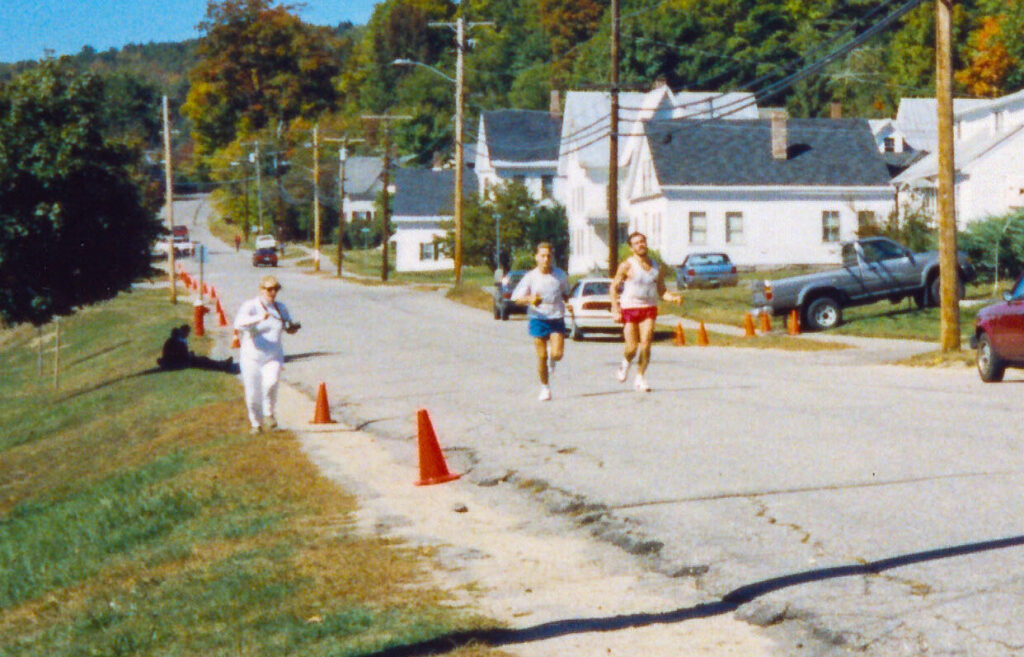
There was, however, a quirk in the timing: my wife, Georgia, and I had a two-year-old child — and she was eight months pregnant on race day. I had picked a late-season marathon to maximize training time but still stay ahead of the due date. That’s how I found myself on September 20, 1995, in Bristol, New Hampshire, about to start the New Hampshire Marathon — a lovely but punishingly hilly course.

Me (in the red shorts) hanging on at the finish with (eight months!) pregnant Georgia running me in on the side.

Reality Steps In

Long story short, I managed to earn that BQ — but got injured during the race. With a newborn on the way and a Massachusetts winter to train through, I decided not to run Boston after all. Instead of racing from Hopkinton to Boston on April 15, 1996, we watched Uta Pippig’s triumphant win (and incredible grit) on TV.

Giving It Another Try

Fast forward to 2017: we’d moved to Florida, and I started entering a few local races again — 5Ks, a 10K, then my first half marathon in more than 20 years, and then another. Some went well, some didn’t, but the racing bug had bitten again.

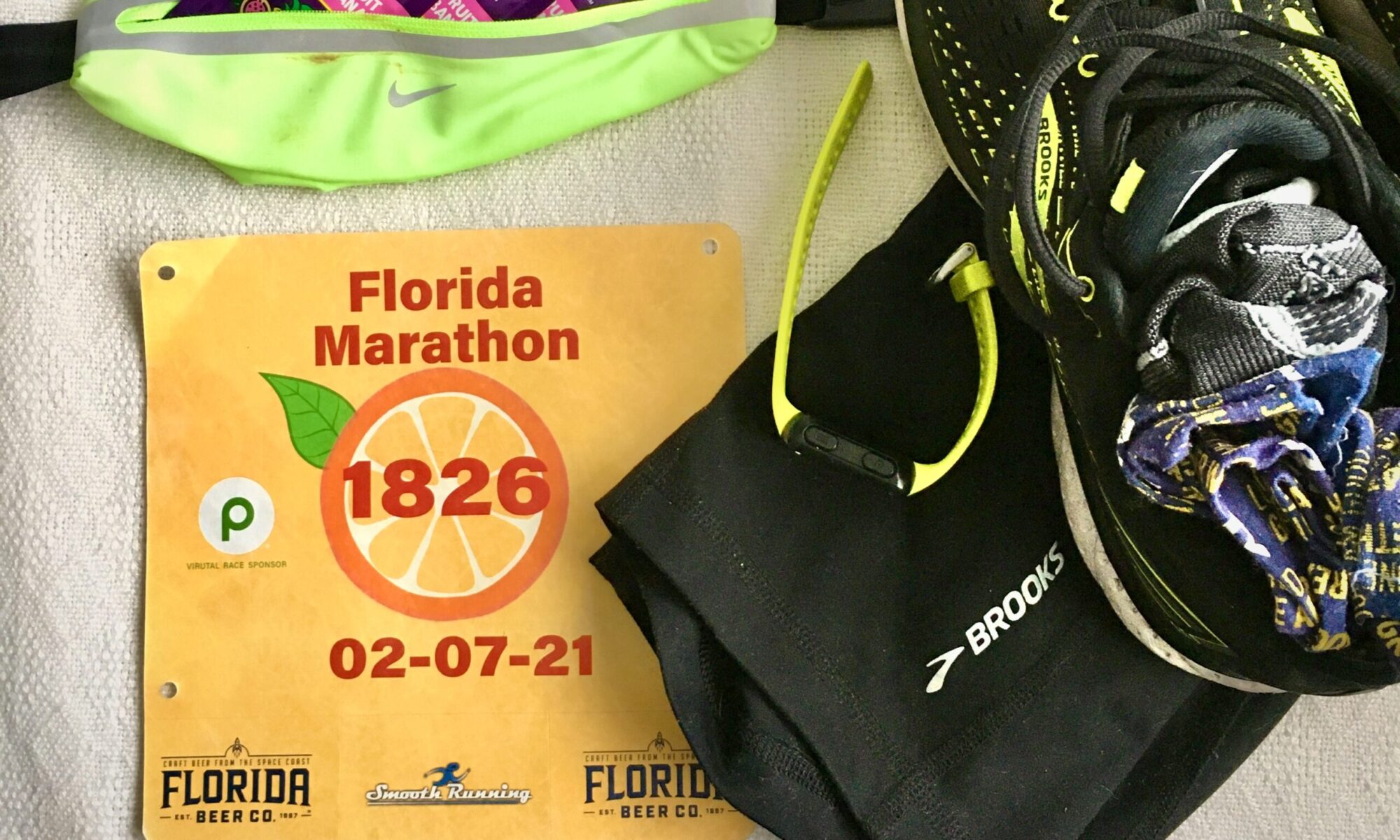
So I thought, Why not give the marathon another shot? I chose the 2021 Publix Florida Marathon on February 7, 2021. I had about four months to build mileage, add some tempo runs, and tackle a few bridges for “hill” training.

Race Day

Race morning arrived with a bang — literally. At our house, about 45 miles north of the course, lightning, thunder, and torrential rain woke us up. I was sure the race would be canceled. I texted our friend Paula, who replied, “Of course it’s on — it’s not raining in Melbourne.”

Sure enough, by the time we got there, it was just cloudy with a few sprinkles. Typical Florida weather.

But once the race started, the storm system moved steadily south. High winds, heavy rain, and severe thunderstorm warnings forced the Race Director to close the double-loop course after a small group of runners — myself included — had already started the second loop.

The Wheels Start to Fall Off

At first it wasn’t too bad, until mile 19, when I could see dark, lightning-streaked clouds rolling in from the top of one of the bridge crossings. Uh-oh. The rain returned, then strengthened, and the wind picked up.

Of course, I made all the rookie mistakes: went out too fast, didn’t drink enough, carried too few calories (three gels is not enough). I had hoped to average just under eight minutes per mile — enough to qualify for Boston in the 55–59 age group — but by mile 19, I was fading fast.

The Turnaround

By mile 21, the “I can’t keep going” voices had arrived. I was trying to accept that the BQ might be gone and just focus on finishing.

Then two women — experienced marathoners, Angela Treleven Persich and another runner she’d met that day — cruised up beside me, running smooth and steady. They were right on the pace I needed, so I asked if I could hang with them.

They chatted, encouraged me, and kept their rhythm even as rain pelted us and the course flooded in ankle-deep water. I hung on all the way to the final mile and the last bridge climb — into the wind, through driving rain — and down to the finish line. For real, I left it all on the course.

At the end, it was pouring, the wind howling. Georgia was there at the final stretch, cheering (after running her own 5K earlier). I crossed the line in 3:27:23 about seven minutes under the qualifying mark of 3:35:00. Woot!

It was an unforgettable day — and a reminder that even solo sports aren’t always solo.

Finally headed for the finish line in the pouring rain!

The Takeaway

A few days later, Angela messaged me:

“Running is a team sport, not individual! My life has been so enriched running races and meeting people along the journey.”

She was right. This race wasn’t just about time, or even finishing — it was about rediscovering the power of community, endurance, and shared effort.


If you liked this post, please let us know by leaving a comment below and consider supporting the site.

Should You Race After 60? My Tips For Racing Safely When You Are Older.

It’s a really good question — and one a lot of runners ask themselves, especially when they’re starting (or restarting) in their 50s, 60s, or beyond. Here are a few things to remember:

1. Racing Increases Your Injury Risk

Let’s be honest: racing almost guarantees you’ll push harder than you do in everyday running. That extra effort can increase your injury risk — sometimes significantly. Not always, but often enough that it’s worth putting this right at the top of the list.

2. Racing Is a Lot of Fun

There’s no denying it. The excitement, the community feeling, the energy at the start line — it’s a blast. Even when you’re wondering why you signed up somewhere around mile two.

3. It’s a Chance to Measure Yourself

A race lets you compare your performance with:

  • Your peers
  • Your age group
  • And, thanks to age-grading tables, even the “younger you”

Many runners find age-grading surprisingly rewarding. It reframes progress in a way that recognizes the realities — and strengths — of getting older.

4. Racing Brings Focus to Your Training

Signing up for an event gives your workouts a purpose. Suddenly “just another run” becomes “part of the plan.” Having something to shoot for can bring a fun sense of structure and give your running a little extra spark.

5. Be Careful With Comparison

If you’re the kind of person who gets frustrated when people you consider your equals are:

  • Training harder
  • Racing faster
  • Racing farther

…it’s worth keeping that in check.

This is my tendency, and I have to be honest with myself because trying to be someone else’s version of “successful” often leads to frustration. Frustration leads to bad decisions. Bad decisions lead to injury. And all of that together can rob you of the joy that running should bring — especially at this stage of life.

Stay inspired by others, not jealous. Keep it light. Keep it fun.

6. But If Competition Drives You — Embrace It

Some people need goals, benchmarks, and friendly rivalry to stay engaged. If competition fires you up and makes you excited to run, then absolutely go for it.

Just know yourself. I can tell you from experience: when I was younger, my competitive streak often overruled my better judgment. I’d push too hard, ignore warning signs, chase the next PR, and skip recovery — and that usually led straight to injury.

If you’re wired that way, great — but make sure you temper it with wisdom. Listen to your body first. The finish line will still be there.

Conclusion

Racing can be a great addition to your running life — or it can be something you happily skip. There’s no “right” answer. What matters is understanding what motivates you, what frustrates you, and what keeps you healthy and consistent. If races bring you joy, focus, and excitement, sign up and enjoy the ride. If not? You’re still absolutely a runner, and you’re doing it exactly right.

The Bottom Line

Race if it motivates you — skip it if it doesn’t. Joy and longevity matter far more than finish lines.


Sidebar: Racing After 60 — My 4 Rules

1. Listen to your body more than your ego.
If something hurts in training, adjust early. No race is worth a preventable setback.

2. Keep the training fun.
If a race plan feels like homework, scale it back, switch to run/walk, or choose a shorter distance.

3. Compare wisely.
Use other runners as inspiration, not as proof you’re “behind.” You’re running your race — literally.

4. Protect recovery like it’s part of the workout.
Sleep, rest days, warmups, cooldowns, hydration — these matter more now than ever.

Header photo by Steward Masweneng on Unsplash


If you liked this post, please let us know by leaving a comment below and consider supporting the site.

I Decided To Start Competing in Track — At 61!

What was I thinking?

A few years ago, as a “Grand Master” runner, I decided to redirect my athletic and fitness goals. The big shift has been focusing on the shorter races and pulling back from the glamour goal of the marathon. After my experiences running Boston in 2022 and 2023 (short version: I crashed in 2022, falling well short of expectation, and DNF’d in 2023), it would be understandable if people said, “Oh, Greg couldn’t take the heat,” or, “Too much for you, so you’re quitting.”

But it’s not that at all.

I started thinking about the realities of my aging body. You know, all the scary stuff: loss of muscle mass, fine motor control, explosive power, flexibility, suppleness, elasticity, and balance (National Library of Medicine link) piled on top of the usual stuff like vision, hearing, memory, brain function, etc. Lots to look forward to, lol!

I grudgingly accepted that the eventual loss is inevitable (it’s called dying). But what about the time between today and then?


First, The Problem

OK, the bad news:

Peak physical strength generally occurs between the ages of 20 and 35, with specific peaks varying between individuals and sexes, and often occurring around age 25 for general muscle strength. For most people, muscle mass and strength peak in the late 20s or early 30s. After this period, strength begins a gradual decline (Harvard Health link).

The best way to address all of that is to engage in activities directed at improving those functions. Simple stuff such as strength training and yoga can work wonders — and I was already doing that.

Now, I’m the sort of person who needs a goal to help with motivation. You too? Sure, being healthy and active into my 70s, 80s, and (hopefully) beyond is an excellent goal and certainly plenty. But I knew I needed something more focused and near-term that I could work on — something that also provided the training that would address the problems.

Yes, I realize that I can strength train, do yoga, run speed workouts, and all the rest and train for the marathon and set goals for those races — and it would do nicely for addressing the above issues. However, the training blocks are long, and the goal races can only be so frequent (one or two per year). Also, more personally, I have not been doing that sort of running and training for decades like many people. My running from my 40s to my late 50s has been 4–6 miles at a time, three or four times a week, with occasional speed work.

Of course, there was the roughly two-and-a-half-year attempt at getting a BQ (Boston Qualifying time) and then running the Boston Marathon — that’s another story entirely.

In short, I was looking for more intensity, less training time, and more frequent high-energy competition.

Looking For Options

I started to rethink what I was focusing on with my running, which is the major activity of choice for me and the one that offers the additional aspect of regular competition. “Shorter races,” I thought. 5K, 10K, and the occasional half. The beauty is that there are events of those distances almost every weekend, wherever you go. Plus, with the 5K and 10K you can easily race every few weeks.

On top of that, the training to improve in the 5K utilizes more strength and power and higher intensity than the long distances. Hello short intervals, shorter long runs, and a bit less of the really long sustained efforts.

Redirecting like that made me get more serious about being regular with the weights and the yoga, since they supported both the near- and long-term goals.

Excellent!

Then, I found out about the Senior Games.

From their website:

“Promoting the benefits of competitive sports, physical fitness and active aging to adults ages 50+.

Welcome to the Senior Games! Our Olympic-style multi-sport events held at the local, state and national level across the United States engage over 100,000 participants ages 50+ each year.

Senior Games provide the camaraderie and challenge of competitive sports to older adults, promote health and well-being, and inspire participants to keep moving.”

Who knew there was any way to compete like this post-college unless you were an elite? Never mind once you’ve reached 50, 60, or older?

Training for the track and the shorter, faster races such as the 5K requires working on the very qualities that I am interested in improving (before I meet the decline coming in the opposite direction).

Hitting The Track

Since I made that decision, I have competed in eight track meets, including the Florida State Senior Games, trying my legs at the 100m, 200m, 400m, 800m, and 1500m events. I found out pretty quickly that the 100 and 200 might not be my events, lol, but every event and every meet has been a chance to challenge myself. Plus, they have been opportunities to be impressed and inspired by the performance of runners much older than I am.

Seeing men and women in their 80s and 90s with spikes on, running a brisk 100m sprint, cruising a 400m, or grinding out a 1500 is NOT what we see every day in life. But there they were, on the track, demonstrating what aging gracefully and vigorously looks like.

So yes, the decision to include track workouts and competition has been a challenge, has made me a stronger (and healthier) runner, and has also shown me the level of performance that is possible for all of us as we get older.

Pushing back the clock, indeed!


If you liked this post, please let us know by leaving a comment below and consider supporting the site.

In Praise of Age-Group Awards

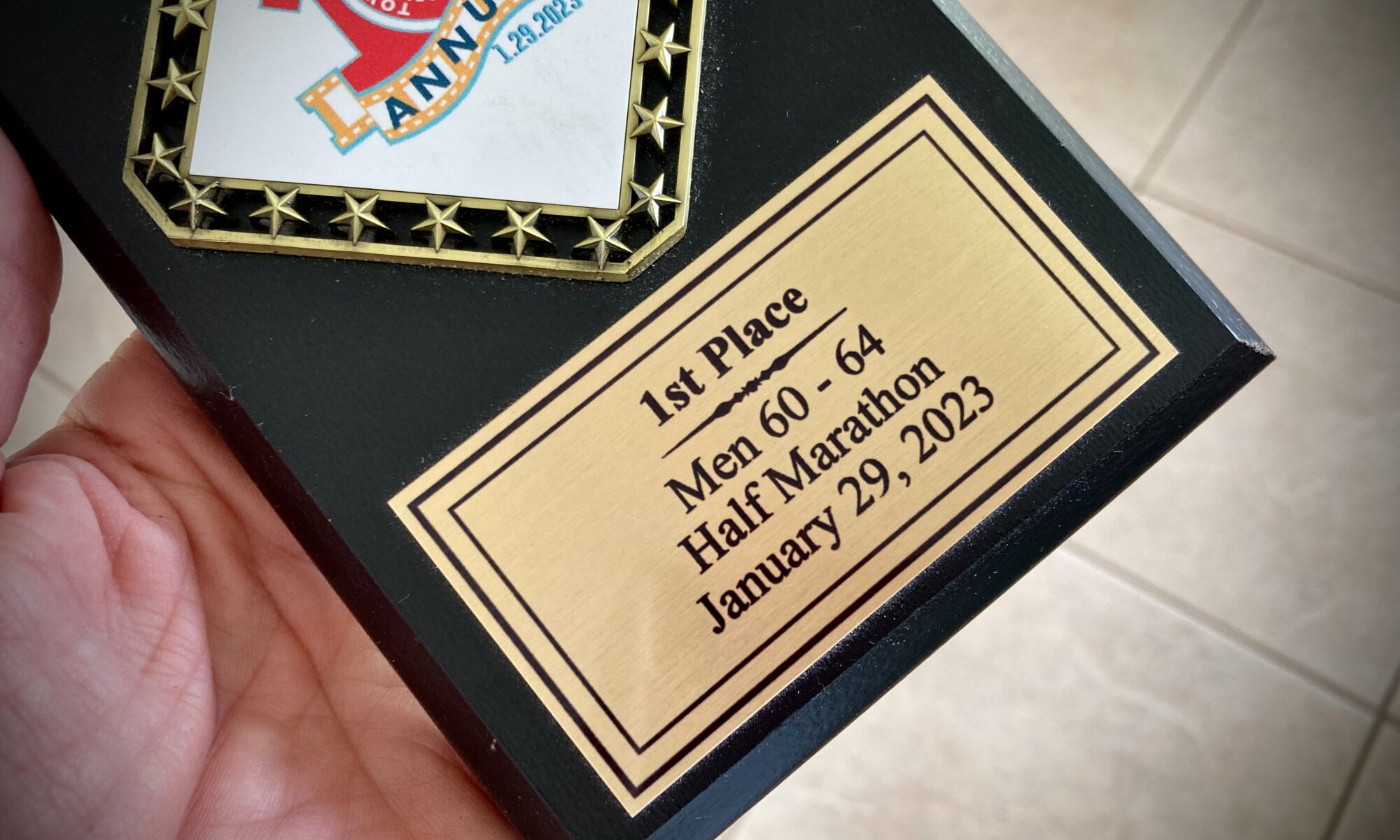
The author's half marathon age group award

Some people think they are a little silly, but I’m a fan.

I know there is a trend lately of “everyone is a winner,” and plenty of people get all grumpy about it, complaining that it devalues actual winners (generally top three male and female), and that one doesn’t need recognition for simply participating.

But, honestly, what’s so awful about a little “way to gofor showing up at a race? Or some official call-out for doing well compared to your age peers?

Sure, there are, usually, only two people who win a road race and six who place (top three for men and women). Recognizing only those individuals is the way to go at an elite event where all participants are within a narrow performance spectrum, but I’m talking about events for regular folk.

You know, the 5K races you can find almost anywhere, all year round, with everyone from first-timers, walkers, couch-to-5K, high school cross-country speedsters, elementary school kids, seniors working hard to hold off age decline, and parents with headphones and strollers.

Those races.

After all, actually winning, or even placing, in a race is unquestionably the province of the young, and by “young” I’m talking teens to late 30s. Once we age past 50, even the fittest of us have the slimmest of hopes to challenge for a win, no matter the event.

Competition is Good

Age group awards are fun. They encourage friendly competition with people of your own age, and some bragging rights when you beat those in a lower age group. It’s great stuff.

Plus, that friendly (but determined) competition and bragging rights are excellent motivators to keep at it and keep going with your fitness. And we all benefit from having motivators and fitness goals.

The author at a recent race with the other 60–64 guys (no, I didn’t run in sandals)

For many of us, fitness is a challenge as we age. It may be that you let it slide a bit (or a lot) while you were in the career/family-raising stage of life, and you’re trying to get on top of it. That is an all-too-common scenario to find oneself in somewhere between 50 and 60.

It’s hard to get going and to keep going, so motivation is hugely valuable. The friendly competition with your five-year age-group peers can be just the right push!

Yes, The Awards Take Time

I realize that the post-race announcements, medal presentation, and winners’ photos for every. single. age. group can feel a bit tedious for some.

Even though I am fortunate to commonly place in my age group, and enjoy the “atta boy”, the additional medal (usually), and getting a photo with the others, I’ve felt that myself.

It’s the waiting.

I mean, since almost all events start announcing the awards with the youngest, there are a LOT of people ahead of you when you reach 60+ years of age.

A Small Suggestion for Race Directors

I applaud all Race Directors—no matter the size of the event. Being RD is a tough job! But, here’s a thought: how about we switch the order in which age group awards are presented at the end of the race? Of course, the young people are running and doing well; let’s celebrate the old folk who are out there, making it happen and getting it done.

Plus, as adults, parents, and grandparents, we spend a lot of time waiting for the kids. It’s OK for them to wait a little bit while we get our recognition.

A bit of turnabout is fair play, no?

I’m all in on the age-group award fun and celebrating everyone showing up and doing their best. How about you?


If you liked this post, please let us know by leaving a comment below and consider supporting the site.

Getting From the Start to the Finish Line Makes You Special. Go You!

It’s like cake! Let me explain…


I’ve been a runner for decades.

In those decades, I have participated in races of all kinds and distances—giant events to local fun runs. At those races have been real runners of ALL ability levels, and I get excited that people have shown up and are ready to go for it.

Like many of us, I have had times when I have trained for specific events and periods when I’m just trying to keep moving regularly. I’ve also spent time as a Certified Personal Trainer and coaching friends with their running. So, I have had many opportunities to encourage beginners and other runners who feel intimidated or discouraged about their abilities compared to “real runners.”

The Conversation

Here is a conversation I have had many times with other runners, particularly recreational runners or new runners, but also long-time participants.

It goes something like this:

me: “Hey, good to see you here at the race! You ready to go?”

them: “Hi! Well, I’m okay, but I’m not as fast as most of these people…”

me: “That’s no big deal, everyone is at a different stage in their fitness and experience. You got here — you do your thing.”

them: “I haven’t done too many races, so…I’ll probably need to walk a little.”

me: “and that’s perfectly fine. After all, you’ll still be beating every single person who couldn’t get off the couch this morning!”

So What’s The Cake Part?

The point I want to make to people when we have this conversation is that they are already way ahead of lots of others and are actually pretty special.

That’s when I say that it’s like cake.

Imagine a nice frosted layer cake representing the entire population. Everybody.

Continuing with the metaphor, the frosting on the top is everyone who does some running or jogging (15% of the US population).

Any distance at all. Any speed.

Then, the very top part of the frosting (the part with the sprinkles or the decorative ganache) are people who enter and run in a road race. Everyone from Faith Kipyegon and Eliud Kipchoge to your 85-year-old grandma who walks a 5K in an hour and a half.

Everyone.


According to this IAAF report, about 0.1% of the US population races. The world’s highest is Ireland at 0.5%

Also, worldwide, about 1/3 of the population aged 15 and over doesn’t get enough basic exercise, and this study identifies many troubling consequences.


Showing Up Makes You Special

Even though there are a few thousand runners at many events, they are still this teeny tiny percentage of the general population.

Therefore, simply showing up and running the race puts you in the highest percentile of not only the population, but also active runners.

So, “yay us!” I say.

Keep moving, keep running, and I’ll see you at the next race. Let’s all be frosting together.


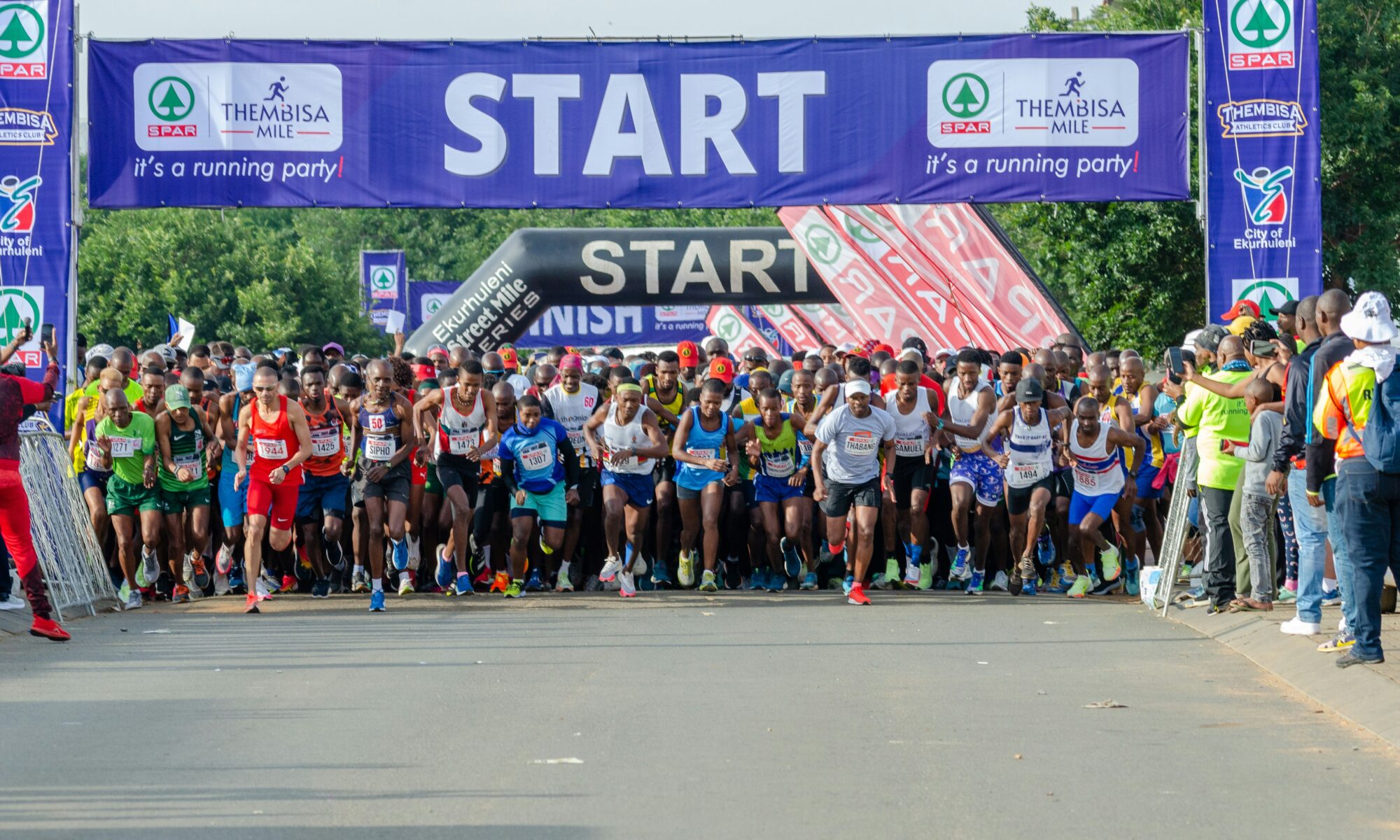
photo: The start corral crowd of runners at the 2023 Boston Marathon (by the author)

If you liked this post, please let us know by leaving a comment below and consider supporting the site.