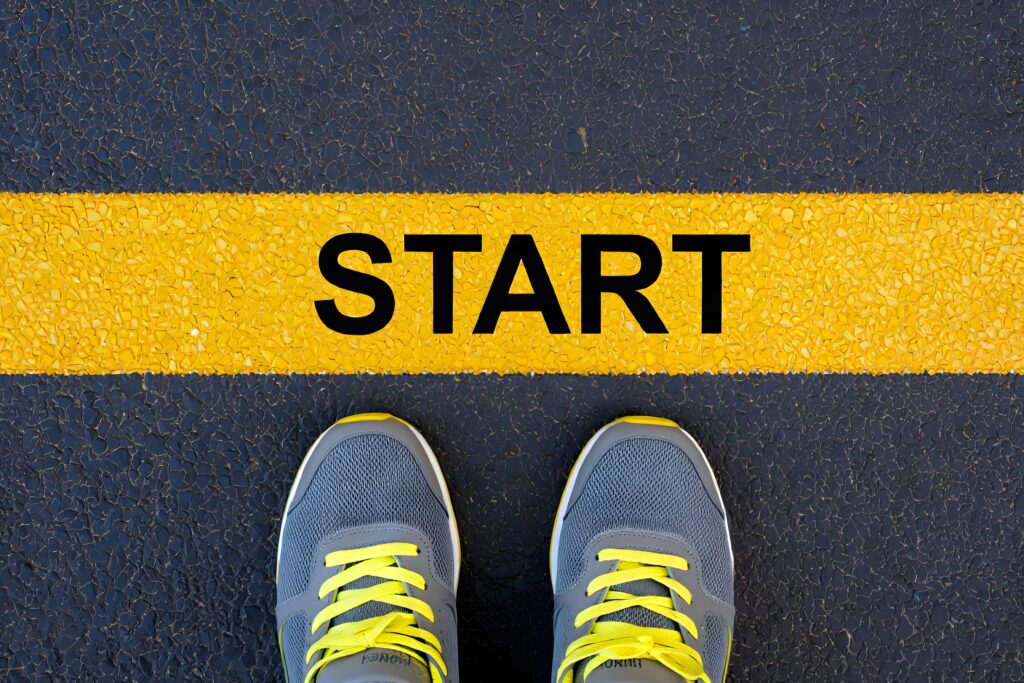
Walking to Running After 60: A Simple Transition Plan

Walking is not separate from running — it’s the foundation of it.

If you can walk comfortably for 20–30 minutes*, you already have the cardiovascular base to begin adding short running segments. Even though I’m a huge advocate for getting people out running, I have tremendous respect for the fitness benefits of simple walking, and it’s the best way to start.

Why the Transition Matters

Your heart and lungs adapt faster than your joints and connective tissue. The run/walk method allows your structural system to catch up safely and efficiently. It also allows you to monitor how your body responds to running in these early stages, and it may take a little time to adapt. But it’s the best way to start and you’ll be happily off running before you know it.

A Four-Week Progression Example

Week 1:

Run 20 seconds / Walk 100 seconds (15–20 minutes total)

Week 2:

Run 30 seconds / Walk 90 seconds

Week 3:

Run 45 seconds / Walk 75 seconds

Week 4:

Run 60 seconds / Walk 60–75 seconds

*Depending on your fitness level, you may be able to do the run/walks in the first week or two every day. But taking it easy at the start is the best approach and always check in with a medical professional before starting.

The “week” designation is simply a suggestion. If that pace works for you, great, if not stay at any level longer if it feels right. There is no deadline—this is all about what works for you.

Signs You’re Progressing Safely

  • You finish runs without joint pain
  • Your breathing recovers quickly
  • You feel better later the same day
  • You look forward to the next session

That’s real progress.


If you liked this post, please let us know by leaving a comment below and consider supporting the site.

Discomfort vs. Pain: How Runners Over 60 Can Tell the Difference

One of the hardest things to learn as a runner, particularly after 60, is knowing when an uncomfortable feeling is part of the workout and when it’s a warning sign.

We’re often told to push through it,” but that advice only works if you understand what you’re pushing through. There’s a big difference between discomfort and pain, and confusing the two is one of the fastest ways to end up injured.

What Discomfort Feels Like

Discomfort is the normal byproduct of effort. It shows up when you’re challenging your body and asking it to adapt.

Discomfort often:

  • Feels like muscle fatigue, heaviness, or mild burning
  • Is symmetrical (both legs feel it, not just one)
  • Improves as you warm up
  • Stays the same or fades as the run goes on
  • Rates around 0–3 on a 10-point pain scale

This is the feeling you can usually run through—while still paying attention.

What Pain Feels Like

Pain is different. Pain is your body asking you to stop and address a problem.

Pain often:

  • Is sharp, stabbing, or sudden
  • Localizes to one specific area
  • Involves joints rather than muscles
  • Gets worse as the run continues
  • Changes your stride or posture
  • Hits 4/10 or higher

This is not something to push through, especially after 60.

Why This Matters More After 60

As we age, recovery takes longer and small injuries can escalate quickly. What might have been a minor tweak at 40 can become weeks off at 60 if ignored.

The margin for error gets smaller—but the upside of smart decisions gets bigger. Stopping early can mean returning in days instead of months.

A Simple Mid-Run Check-In

  • If you’re unsure during a run, ask yourself:
  • Is this feeling improving, staying the same, or getting worse?
  • Is it affecting how I’m moving?
  • Would I be okay if this felt exactly the same tomorrow?

If the answer raises any concern, stopping is usually the right call.

The Long Game of Running After 60

Running after 60 isn’t about proving toughness—it’s about protecting consistency. The runners who last aren’t the ones who ignore warning signs; they’re the ones who respect them.

Knowing the difference between discomfort and pain doesn’t make you cautious. It makes you smart.


If you liked this post, please let us know by leaving a comment below and consider supporting the site.

The Gear You Actually Need After 60

For runners who want the essentials, not the noise.

When you start (or restart) running after 60, the internet will tell you that you need an entire sporting-goods store’s worth of gear: carbon-plated shoes, triple-layer hydration packs, a $400 GPS watch, compression everything, and enough neon fabric to direct air traffic.

Here’s the truth: you don’t need most of that.

But there are a few things worth having — not because they make you “serious,” but because they make running feel better, safer, and more enjoyable at this stage of life.

So here’s the real list — the stuff that actually matters.


1. Shoes That Fit Your Feet (and Your Running Style)

This is the only thing you truly must get right.

Your feet change as you age — arches flatten, toes spread, and cushioning becomes more important. The shoe that worked for you at 35 might feel like a medieval boot now.

What to look for:

  • A comfortable fit right out of the box
  • Good cushioning (your joints will thank you)
  • Enough room in the toe box
  • A model suited to walking/running combos if you’re doing intervals

You don’t need carbon plates. You don’t need “super shoes.”

You just need shoes that make your feet happy.

2. Moisture-Wicking Clothes (AKA: Skip the Heavy Cotton)

Cotton is great for pajamas. Not so great for running in warm weather or humid mornings.

A few inexpensive pieces of moisture-wicking clothing will:

  • Keep you cooler
  • Prevent chafing
  • Feel lighter during run/walk intervals

You don’t need a wardrobe overhaul — just a couple of tops and a pair of shorts or leggings that breathe.

3. A Light, Comfortable Hat or Visor

Especially important if you:

  • Run in the morning sun
  • Run in Florida (enough said)
  • Want to keep sweat out of your eyes

A $20 running hat does more for comfort than any fancy gadget.

4. Body Glide or Anti-Chafe Balm

Let’s be honest: chafing gets real after 60.

If you’re totally new to running, you’ll be surprised where you get chafed! The most common, though, are inside of the tops of your thighs and arm pits. A quick swipe before your run saves a lot of discomfort later — especially on longer outings or in warm weather.

5. A Simple Running Watch or App (If You Want One)

You don’t need all the tech. You don’t need a data dashboard. You don’t need to know your VO₂ max.

But it is helpful to know:

  • Your run/walk intervals
  • Your total time
  • Your basic pace (only if you care)
  • Your total distance (which requires a GPS enabled watch or phone app or old-school odometer on your car/bike)

A $50 watch or the free version of an app like Runkeeper or Strava is plenty.

If data stresses you out?

Skip it. Run by feel. You’re still a real runner.

6. Reflective Gear or a Safety Light

If you run early or later in the evening, visibility is non-negotiable.

A small clip-on light or reflective strap is inexpensive and keeps you safe.

7. Optional but Extra Nice

Not required — but often appreciated by runners in their 50s, 60s, and beyond.

  • A handheld water bottle ( particularly for warm climates)
  • Thin running socks (the good ones last almost forever)
  • Sunglasses that don’t bounce
  • A small running belt (if you carry keys or a phone)

Notice what’s not on this list:

Compression sleeves, foam rollers, recovery guns, high-tech insoles, performance gels, and anything that requires a YouTube tutorial.

The Bottom Line

You don’t need a ton of gear to run after 60.

You don’t need the expensive toys.

You don’t need the “runner uniform.”

You don’t need to look like the cover of a fitness catalog.

You just need:

  • Comfortable shoes
  • Comfortable clothes
  • A little safety gear
  • And the desire to get out the door

Everything else is optional.

Show up, move forward, enjoy the process — that’s the equipment that really matters.


If you liked this post, please let us know by leaving a comment below and consider supporting the site.

Getting From the Start to the Finish Line Makes You Special. Go You!

It’s like cake! Let me explain…


I’ve been a runner for decades.

In those decades, I have participated in races of all kinds and distances—giant events to local fun runs. At those races have been real runners of ALL ability levels, and I get excited that people have shown up and are ready to go for it.

Like many of us, I have had times when I have trained for specific events and periods when I’m just trying to keep moving regularly. I’ve also spent time as a Certified Personal Trainer and coaching friends with their running. So, I have had many opportunities to encourage beginners and other runners who feel intimidated or discouraged about their abilities compared to “real runners.”

The Conversation

Here is a conversation I have had many times with other runners, particularly recreational runners or new runners, but also long-time participants.

It goes something like this:

me: “Hey, good to see you here at the race! You ready to go?”

them: “Hi! Well, I’m okay, but I’m not as fast as most of these people…”

me: “That’s no big deal, everyone is at a different stage in their fitness and experience. You got here — you do your thing.”

them: “I haven’t done too many races, so…I’ll probably need to walk a little.”

me: “and that’s perfectly fine. After all, you’ll still be beating every single person who couldn’t get off the couch this morning!”

So What’s The Cake Part?

The point I want to make to people when we have this conversation is that they are already way ahead of lots of others and are actually pretty special.

That’s when I say that it’s like cake.

Imagine a nice frosted layer cake representing the entire population. Everybody.

Continuing with the metaphor, the frosting on the top is everyone who does some running or jogging (15% of the US population).

Any distance at all. Any speed.

Then, the very top part of the frosting (the part with the sprinkles or the decorative ganache) are people who enter and run in a road race. Everyone from Faith Kipyegon and Eliud Kipchoge to your 85-year-old grandma who walks a 5K in an hour and a half.

Everyone.


According to this IAAF report, about 0.1% of the US population races. The world’s highest is Ireland at 0.5%

Also, worldwide, about 1/3 of the population aged 15 and over doesn’t get enough basic exercise, and this study identifies many troubling consequences.


Showing Up Makes You Special

Even though there are a few thousand runners at many events, they are still this teeny tiny percentage of the general population.

Therefore, simply showing up and running the race puts you in the highest percentile of not only the population, but also active runners.

So, “yay us!” I say.

Keep moving, keep running, and I’ll see you at the next race. Let’s all be frosting together.


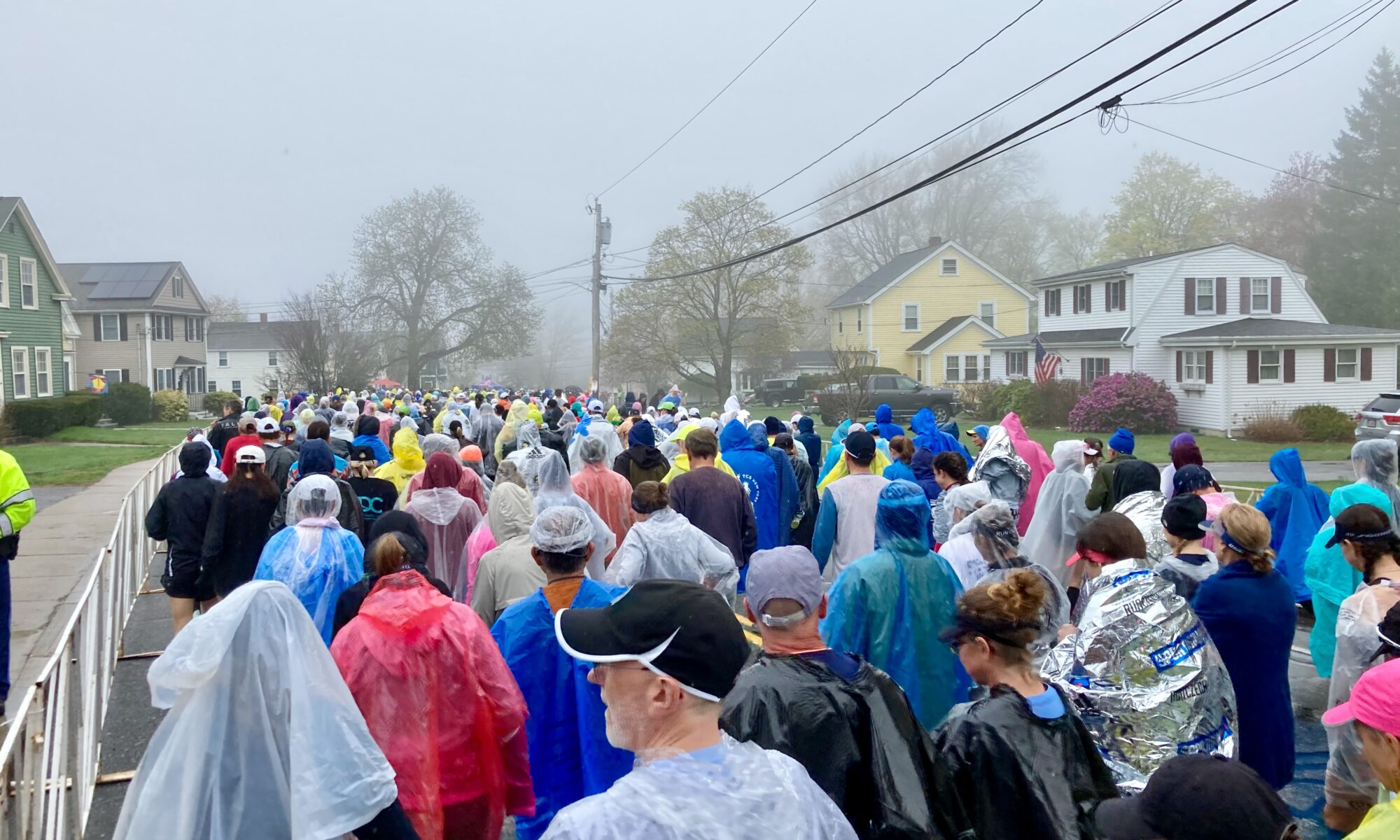
photo: The start corral crowd of runners at the 2023 Boston Marathon (by the author)

If you liked this post, please let us know by leaving a comment below and consider supporting the site.

You’re Never Too Old to Be a Real Runner

Running is something natural, right?

You did it as a kid without thinking. You just took off across the yard, chased your friends, ran for the sheer joy of it. It was effortless—and honestly, it was pretty fun.

Then life happened. Work, family, responsibilities, decades of being “busy.” Maybe a few aches showed up. Maybe the idea of exercise became something serious instead of something joyful. But eventually you decide: I’m going to start running again. And it seems simple, right? Lace up, head out the door, take off down the street or onto a trail.

Is This Real?

Except… maybe now it’s a little slower. Maybe you’re not exactly gliding. Maybe you need to—gasp—alternate walking with running. And then some other runner comes cruising by, smooth and fast, and you think, “Now that’s a real runner. That’s what I’m working toward.”

Sometimes that’s motivating. Sometimes, for newer or older runners, it’s discouraging: I’m never going to run like that again. Or maybe you’re mid–walking break and feel a little embarrassed.

Going For It

But you keep at it. You get stronger. You take fewer walk breaks. You start noticing the fancy shoes with the giant foam stacks and the watches that look like mission control. You hear people talk about marathons, BQs, age-group records, and those Abbott World Marathon Majors stars.

And then somebody convinces you to join Strava, where normal-looking humans are apparently out there running 40-mile weeks and crushing monster workouts before breakfast.

Here’s the truth: you don’t need any of that. That isn’t what defines you as a “runner.”

Not the races, not the watches, not the super shoes, not the selfies, not the social media uploads, not the mile splits, not the comparison game. You don’t even need to run the whole time.

At our age, (and, really, any age) the magic is wonderfully simple. There’s only one thing you need to do to be a real runner:

Get on your feet and start running.

Your pace doesn’t matter. Your walk breaks don’t matter. Your age absolutely doesn’t matter. If you’re out there moving forward—consistently, joyfully, at whatever speed works for your body—you’re already a real runner.

Oh, and don’t forget the most important part:

Have fun doing it!


If you liked this post, please let us know by leaving a comment below and consider supporting the site.

How To Get Started Running After 60 (Even If You’ve Never Run Before)

If you haven’t been running in a while, or just for the first time.

Starting to run after 60 can feel intimidating, especially if you’ve never thought of yourself as a “runner.” The good news is that you don’t have to become a runner overnight. You just have to start moving in that direction.

This post will give you some helpful tips and, I hope, encouragement.

(This information is broadly applicable and relevant, but the consequences are firmly significant for us over 60. We have decades of health and fitness history behind us, plus the realities of recovery challenges as we get older.)

First of all, don’t get all up in your head about it. Whether you haven’t been running in five years, 15 years, or even ever, that doesn’t mean you can’t get going and get started.

Believe in Yourself

The key here is not to listen to the negative voices in your head telling you “you’re too old for this,” “it’s too late,” or “you’ll just embarrass yourself.” Those voices are lying to you. You can start any kind of physical activity — including running — at any point in your life. You just need to honestly evaluate where you are, your relative health, and accept that it’s going to take a little time. But that sort of thing is just part of life over 60, right?

To help set the mood, here are a few inspirational quotes for you:

“The secret of getting ahead is getting started.” — Mark Twain

“The way to get started is to quit talking and begin doing.” — Walt Disney

“A journey of a thousand miles begins with a single step.” — Lao Tzu

See the common theme?
Yeah, me too. Just get started.

Step 1: Redefine What Running Means

Here’s a wonderful thing about running: not only is it not complicated, but it really doesn’t require much of an investment to get going. I mean, it’s not like you’re getting into pole vaulting or something — I bet those poles cost a bundle. (We can talk about running-gear obsession in another post, lol.)

Running does not have to be fast or continuous to count. A slow jog for 20 seconds followed by a walk is running. The goal is not speed — it’s gradual adaptation.

Step 2: Get Decent Running Shoes

All you really need is some comfortable clothing you can move in and a pair of appropriate running shoes. Now, I have to admit the running shoe part is pretty important. A good pair of running shoes will keep you comfortable and help protect you from injury on a variety of surfaces. There are all sorts of shoes for different biomechanics and different kinds of running, but that’s getting ahead of things.

Pretty much any running-focused store can help you get into an inexpensive pair of all-around running shoes for recreational running.

Simply find a decent running store and ask for help picking out shoes. Be very clear with the nice person helping you that you’re getting back into running and tell them about your particular health situation. They will be super excited to help you get back to running. Trust me!

Try this Google search: Running stores near me

You can decide about trail shoes, racing shoes, spikes, carbon plates, heel drop, funky laces, and whatever else once you get going.

So don’t get stressed about this one. Find a decent pair. Don’t pay a ton of money. Lace up — and get going!

You can go down a deep, dark rabbit hole searching for advice online about how to get started, specifically. But you don’t need to overcomplicate this.

Step 3: Use a Run/Walk Approach

Start with:

  • 5-minute walk warm-up
  • 20–30 seconds of easy running
  • 1–2 minutes of walking
  • Repeat for 15–20 minutes

Finish feeling like you could have done more.

Step 4: Run Every Other Day

Two or three days per week is enough. Your body adapts during recovery, not during the run itself.

Step 5: Ignore Pace Completely

Your pace is irrelevant right now. Effort and consistency are what matter.

The Real Goal

The real goal of the first month is not distance or time. It’s building the habit and staying injury-free.

If you do that, you’re already succeeding.


My 7 Tips To Help You Get Started Running After 60:

  1. Take it easy. Start by walking, and maybe do a little walk/run.
  2. Forget about the past. The running or training you did years ago is helpful to remember, but this is now. Take time to see where your body is today — and listen to it.
  3. Don’t compare yourself to others. You’re you. Uniquely YOU.
  4. Think of the long game. The goal is consistent movement. Maybe that’s all you need — or maybe you’ll build from there. For now, just start moving.
  5. Be consistent. Start slow and short, build gradually, and keep at it. That being said…
  6. Don’t overdo it. The first time out, do less than you think you can or want to do. Pay attention to soreness and resist pushing through it. Recovery from new activity takes time. Your body will adjust if you give it the chance.
  7. ALWAYS check in with a health professional. They’re on your side and can tell you if there are any special considerations you need to keep in mind.

Take that first step and have fun!


If you liked this post, please let us know by leaving a comment below and consider supporting the site.